Koi Flashing and Rubbing: Causes & Fixes
Flashing koi scratch against rocks and the liner for two main reasons: external parasites or poor water quality. Test the water first, then treat with salt or medication and quarantine if needed.
If your koi are darting to the bottom and scraping their bodies against rocks, gravel, or the liner, that behavior is called flashing, and it almost always means something is irritating their skin or gills. The two likely causes are external parasites, such as ich, flukes, or costia, and poor water quality, usually ammonia or nitrite from an overwhelmed filter, or a sudden pH swing. Your first action is not to dump in chemicals. It is to test the water, because half the time the problem is the water itself, and treating for parasites when the real issue is ammonia just adds stress.
Test the Water First, Then Treat

API POND MASTER Test Kit (500-Test)
Liquid kit reads ammonia, nitrite, pH, and phosphate so you can rule out water before treating.
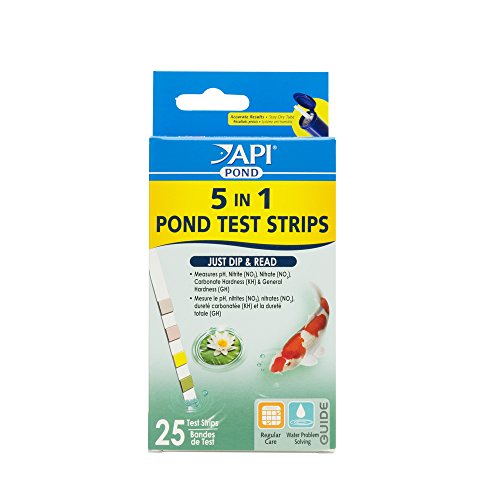
API Pond 5-in-1 Test Strips (25-ct)
Fast dip strips for pH, KH, GH, nitrite, and nitrate when you need a quick check.

Evaporated sea salt to support the slime coat and help with some protozoan parasites at 0.3 percent.

Microbe-Lift Broad Spectrum Disease Treatment (32 oz)
Malachite green and formalin formula labeled for ich, costia, trichodina, and more in koi ponds.
What flashing looks like and why it happens
Flashing is the pond equivalent of an itch you cannot reach. A koi will suddenly turn on its side, flick, and rub a flank, gill cover, or belly against a hard surface, then dart away. You might see a single flash now and then, which is usually nothing. The warning sign is repeated, frantic flashing, several fish doing it, or flashing paired with other symptoms like clamped fins, extra slime, red streaks, gasping at the surface, or rubbing concentrated around the gills.
Two big categories explain almost every case. The first is irritation from poor water chemistry. The second is external parasites living on the skin and gills. They can also overlap, because stressed fish in bad water are far more likely to suffer a parasite bloom, since parasites are often present at low levels and only flare when the koi's immune system is run down.
Common causes of flashing
- Ammonia or nitrite. Both burn gill and skin tissue. A new or recently disturbed pond, an overstocked one, or overfeeding can spike these.
- pH swing or chlorine. A big top-up with untreated tap water, or a sudden pH shift, irritates fish and triggers flashing.
- Ich (white spot). Tiny white grains like salt on the fins and body, with heavy flashing as the parasite burrows.
- Flukes (gill and skin). Microscopic worms that cause flashing, clamped fins, and labored breathing, often with no visible spots.
- Costia, trichodina, chilodonella. Protozoan parasites that produce a grey, slimy film and persistent rubbing.
How to diagnose the cause
Work from the most likely and easiest to check toward the harder. This order saves fish and money.
Step 1: Test the water
Before anything else, run a full set of readings: ammonia, nitrite, nitrate, pH, and KH. Ammonia and nitrite should both read zero. Anything above zero is irritating your fish and may be the whole problem. A liquid kit is more precise for ammonia and nitrite, while strips are handy for a fast weekly check. If you are unsure whether your pond is even cycled, read our guide to the pond nitrogen cycle, because an incomplete cycle is the most common reason new ponds make fish flash.
Step 2: Observe the fish closely
Look for visible clues. Salt-like white spots point to ich. A dull, grey, slimy sheen suggests costia or another protozoan. Rapid gill movement, gasping, and flashing focused near the gills suggest flukes. Note how many fish are affected and whether the behavior is occasional or constant.
Step 3: Confirm parasites if you can
The only certain way to identify a parasite is a skin or gill scrape under a microscope. Most hobbyists do not have this gear, so if water is clean and symptoms persist, a koi health specialist or aquatic vet can do a scrape and tell you exactly what you are dealing with, which prevents wasting a treatment on the wrong target.
How to fix it
Match the fix to the cause you found.
If the water is the problem
Do a 20 to 30 percent water change with dechlorinated water to immediately dilute ammonia or nitrite. Stop or cut back feeding, since uneaten food and waste drive ammonia. Check that your pump and filter are sized to turn the whole pond over at least once per hour and that the biofilter has not been over-cleaned. In many cases, clean water alone stops the flashing within a day or two.
If parasites are confirmed or strongly suspected
Pond salt at around 0.3 percent helps the slime coat and knocks back some protozoans like costia and trichodina. Salt does not treat every parasite, though, so flukes and ich usually need a dedicated medication. Dose everything to your true pond volume, because under-dosing fails and over-dosing harms fish. Use our pond salt calculator for the exact salt amount and our pond volume calculator to confirm your gallons before any treatment.
- Read the label and dose to volume. Treatments are calibrated to gallons. Guessing is the most common reason a treatment fails.
- Watch oxygen. Many medications and warm water lower dissolved oxygen, so run extra aeration during treatment.
- Do not mix medications. Combining treatments can be toxic. Follow one course at a time.
- Mind the filter. Some treatments stall beneficial bacteria, so test for ammonia and nitrite during and after a course.
- Repeat as directed. Parasites like ich have life stages that a single dose misses, so complete the full course.
Quarantine and prevention
If a single new fish is flashing, a separate quarantine tank lets you treat and watch it without medicating the whole pond. The best long-term habit is to quarantine every new koi for two to four weeks before adding it, which stops most outbreaks at the door. Keep your bioload sensible, since koi are heavy-waste fish, and avoid overstocking that runs down water quality and immunity. If you are planning your fish count, our koi stocking calculator keeps you in a safe range.
How to prevent flashing long term
Most flashing traces back to stress, and stress almost always starts with water. Keep these habits and outbreaks become rare:
- Test weekly and keep ammonia and nitrite at zero.
- Always dechlorinate top-off and water-change water.
- Feed only what koi finish in a few minutes, and ease off in cold water.
- Quarantine new fish and new plants before they go in the main pond.
- Maintain strong aeration and a filter sized to your real volume.
A koi that flashes once and swims on is rarely a crisis. A koi that rubs raw, hangs at the surface, or stops eating needs you to act. Test first, fix the water, then treat parasites deliberately and to volume. If symptoms persist after clean water and a correct treatment, bring in a koi specialist rather than stacking more chemicals. For related symptoms, see our guides on koi gasping at the surface and koi not eating.
Pond Build & Maintenance Planner
Build planner, stocking planner, water-test log, and seasonal maintenance schedule, in one printable planner that keeps your pond healthy year-round.
Frequently Asked Questions
Why is my koi flashing and rubbing on rocks?
Flashing is your koi scratching itself against the liner, rocks, or gravel to relieve irritation. The two usual causes are external parasites, such as ich, flukes, costia, or trichodina, and poor water quality, especially ammonia or nitrite that burns the gills and skin. Occasional flashing can be harmless, but repeated, frantic rubbing by one or more fish is a clear signal that something is wrong and needs checking.
Can bad water alone make koi flash without parasites?
Yes. Ammonia and nitrite irritate the gills and skin directly, and a sudden pH swing or a heavy dose of chlorinated top-off water can make koi flash, twitch, and produce extra slime. This is why you always test the water before reaching for a parasite treatment. If your numbers are off, fixing the water with a partial water change and dechlorinator often stops the flashing on its own.
Will pond salt cure koi parasites?
Salt at around 0.3 percent, roughly 2.5 pounds per 100 gallons, helps with some protozoan parasites like costia and trichodina and supports the slime coat, but it does not kill every parasite. Flukes and ich often need a dedicated treatment. Always dose salt to your real pond volume, never guess, and remember salt does not evaporate, so you only top up for the water you actually remove.
Do I need a microscope to diagnose pond parasites?
A microscope and a gill or skin scrape are the only way to identify a parasite with certainty, and serious koi keepers rely on them. Most hobbyists cannot do this, so they test water first, rule out poor quality, then treat based on symptoms or have a koi specialist do a scrape. If fish are dying or covered in lesions, get professional help rather than guessing with chemicals.
Should I quarantine a flashing koi?
If only one fish is flashing and the rest look fine, moving it to a separate quarantine tank lets you treat and observe it without dosing the whole pond. More often, parasites are already present throughout the pond by the time you notice symptoms, so treating the entire system makes sense. Always quarantine brand-new fish for two to four weeks before adding them, which prevents most parasite outbreaks.
How long does it take flashing to stop after treatment?
If poor water was the cause, flashing often eases within a day or two of a water change and stable readings. Parasite treatments usually run as a course over one to two weeks, sometimes with repeat doses to catch hatching stages, and you should see improvement as the cycle completes. If fish keep flashing after correct water and a full treatment, consult a koi health specialist for a scrape.
Planning or running a pond?
Use our free calculators and guides to get every number right.
Pond Planner: $39