Pond Water Changes: How and When
How often to change koi pond water, why 10 to 20 percent weekly works, why you must always dechlorinate and temperature-match, and the difference between top-ups and changes.
Regular water changes are the quiet backbone of a healthy koi pond. The simple rule: change about 10 to 20 percent of your volume weekly or biweekly, always dechlorinate the new water, and match the temperature as you refill. Done this way, water changes export the nitrate and dissolved waste your filter cannot remove, replenish minerals and buffering, and keep your koi in stable, clean water. Done carelessly with raw tap water, they can crash your biofilter in an afternoon.
Why ponds need water changes
Your biofilter is brilliant at converting toxic ammonia and nitrite into nitrate, but it cannot remove the nitrate itself. In a fish-stocked pond, nitrate steadily accumulates, along with dissolved organics, phosphates, and the byproducts of fish metabolism. Plants and algae use some of it, but rarely all of it. Partial water changes are how you physically export that buildup and dilute what remains.
Fresh water does more than dilute waste. It restores the carbonate hardness (KH) that buffers your pH and the general hardness (GH) minerals your koi need, both of which the nitrogen cycle slowly consumes. A pond that never gets water changes tends to drift toward high nitrate, falling KH, and unstable pH, which is a recipe for stressed fish and stubborn algae.
How often and how much
The right schedule depends on your stocking and planting, but the safe default for a koi pond is small and regular.
| Pond situation | Suggested change |
|---|---|
| Stocked koi pond, typical | 10 to 20% weekly or every two weeks |
| Heavily stocked koi pond | 15 to 20% weekly |
| Lightly stocked or heavily planted | 10 to 15% every two to three weeks |
| Water-quality emergency | 25 to 50% now, repeat daily as needed |
Small and frequent always beats large and rare. A run of modest changes barely disturbs your fish, your temperature, or your bacteria, while one giant change can swing all three at once. The only time large changes are justified is an emergency such as an ammonia spike, where diluting the toxin protects the fish.
Water change essentials

API Pond Chlorine and Heavy Metal Neutralizer, 32 oz
Removes chlorine and heavy metals instantly so tap top-ups are safe for fish.

MICROBE-LIFT Super Dechlorinator Plus Conditioner, 1 Gallon
Neutralizes chlorine and chloramine for large koi ponds in one dose.

API Pond Master Liquid Test Kit, 500 tests
Track ammonia, nitrite, and pH so you know when a change is due.
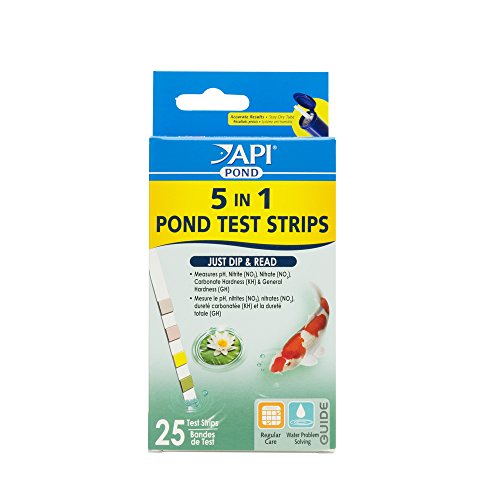
API Pond 5-in-1 Test Strips, 25 ct
Fast dip strips for a quick weekly water check before and after changes.
Always dechlorinate
This is the rule you can never skip. Municipal tap water is treated with chlorine or chloramine specifically to kill bacteria, and it cannot tell your harmful bacteria from the beneficial colony running your nitrogen cycle. Pouring untreated tap water into your pond can wipe out that colony and trigger an ammonia spike, and the same chemicals burn delicate fish gills.
- Dose a dechlorinator for the gallons of new water you are adding, every single time.
- Mind chloramine. Unlike plain chlorine, chloramine does not gas off if water sits out, so a conditioner that handles chloramine is essential in many areas.
- Add the conditioner as you fill, or pre-treat the new water, so chlorinated water never sits on your fish or media untreated.
Dose to your real gallons, not a guess. Knowing your true volume is the difference between protecting the pond and underdosing it, so measure it once with our pond volume calculator and dose from that number. The same figure drives your pond salt and every other treatment.
Match the temperature
Koi are sensitive to sudden temperature shifts. A change of more than a few degrees can stress their immune system and, in cold weather, open the door to disease. To keep changes gentle:
- Refill slowly so new water blends with pond water rather than pooling cold in one spot.
- On cold days, favor smaller changes and aim for water close to pond temperature.
- In summer heat, cooler top-up water can be a relief, but still add it gradually near a waterfall or aerator so it mixes evenly.
Top-ups versus true changes
It is worth knowing the difference, because they do different jobs.
- Top-ups replace water lost to evaporation and splash. They restore the level but remove nothing, so they do not lower nitrate. They still need dechlorinating.
- True water changes remove pond water first, then replace it. Only this exports accumulated nitrate and waste and refreshes your chemistry.
In hot, dry weather you may be topping up often just to hold the level, and that is fine, but do not let frequent top-ups fool you into thinking you are changing water. Make a habit of pairing a water test with your schedule: rising nitrate or falling KH is your signal that a real change, not just a top-up, is overdue. A few buckets a week, dechlorinated and temperature-matched, is one of the cheapest and most effective things you can do for your koi.
Pond Build & Maintenance Planner
Build planner, stocking planner, water-test log, and seasonal maintenance schedule, in one printable planner that keeps your pond healthy year-round.
Frequently Asked Questions
How often should I change pond water?
For a stocked koi pond, change about 10 to 20 percent of the volume weekly or every two weeks. Lightly stocked or heavily planted ponds can go longer, while crowded koi ponds benefit from the higher end. Regular small changes are far better than rare large ones, because they dilute nitrate and replenish minerals without shocking your fish or your beneficial bacteria.
Why do I need to dechlorinate pond water?
Tap water in most areas contains chlorine or chloramine to kill bacteria, and it does not spare the beneficial bacteria in your biofilter. Adding untreated tap water can crash your nitrogen cycle and burn fish gills. Always dose a dechlorinator as you refill, sized to the gallons you are adding. Chloramine in particular does not gas off on its own, so a conditioner is essential.
Do I need to match the temperature of new water?
Yes, as closely as you reasonably can. A sudden temperature swing of more than a few degrees stresses koi and can trigger illness, especially in cold weather. Refill slowly, mix the new water in rather than dumping it, and on cold days favor smaller changes. In summer, cool top-up water can be a welcome relief, but still add it gradually.
What is the difference between a top-up and a water change?
A top-up replaces water lost to evaporation and splash, restoring the level but not removing pond water, so it does not dilute nitrate. A water change removes a portion of pond water and replaces it with fresh, which exports accumulated nitrate and waste. Both still need dechlorinating, but only true changes refresh the water chemistry your koi depend on.
Can I do too many water changes?
Yes. Very large or very frequent changes strip the minerals and buffering (KH) your pond needs and can swing pH and temperature. They can also stress the biofilter. Stick to modest, regular changes of 10 to 20 percent rather than occasional massive ones. The exception is a water-quality emergency, where larger emergency changes are justified to protect the fish.
How do I know how much water to change?
Start from your true pond volume, then take the percentage from there. Most owners overestimate their gallons, which leads to underdosing dechlorinator and treatments. Measure your length, width, and average depth once and use a pond volume calculator to get an accurate figure, then change 10 to 20 percent of that number and dose conditioner to the gallons added.
Planning or running a pond?
Use our free calculators and guides to get every number right.
Pond Planner: $39