Best Pond Filters (2026)
The best pond filters for koi and goldfish ponds in 2026, from budget pressure filters to premium UV combos, sized by real koi gallons with verified owner feedback.
The best pond filter for most backyard koi ponds is a pressurized biological filter with a built-in UV clarifier, sized to your real koi gallons rather than the larger ornamental-pond rating on the box. For a typical 1,000-gallon koi pond, a pressure filter rated to 1,000 koi gallons with integrated UV keeps water clear, converts toxic ammonia, and hides neatly behind a waterfall. Here are six pond filters covering small starter ponds up to large koi systems, each matched to a realistic capacity.
Best Pond Filters for 2026

VIVOHOME Pressurized Bio Pond Filter, 1840 GPH (up to 1,000 gal koi)
Sized for koi ponds up to 1,000 gallons, with a built-in UV light and a backwash cleaning system.
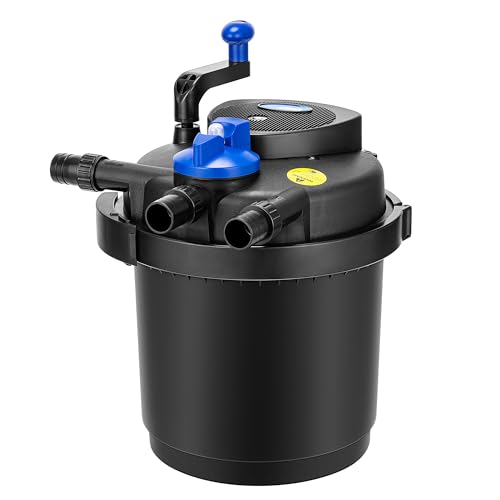
VIVOHOME Pressurized Bio Filter, 1580 GPH (up to 800 gal koi)
A right-sized pick for small to mid koi ponds, with a 13W UV clarifier to fight green water.
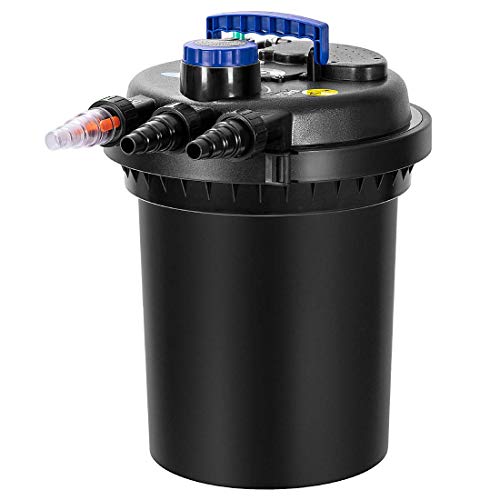
VIVOHOME Bio Pressure Pond Filter, 2630 GPH (up to 1,300 gal koi)
Steps up capacity for larger koi ponds while keeping the integrated UV and easy-clean handle.

Aquascape UltraKlean 2000 Pressure Filter + 14W UV (2,700 GPH)
A premium pond-brand pressure filter and UV combo built for serious koi keepers and demanding water quality.
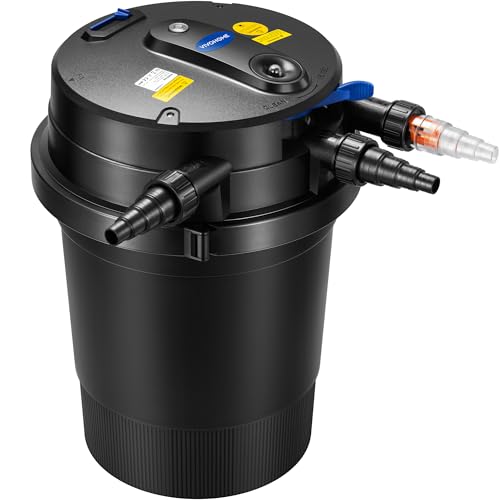
VIVOHOME Auto-Cleaning Pressurized Bio Filter, 2640 GPH
An 18W UV plus a built-in timer and backwash system for hands-off maintenance on ponds to ~1,585 gallons.

Anbull Bio Pressure Pond Filter, 1060 GPH (9W UV)
A wallet-friendly entry pressure filter with a crank-handle cleaner for small ponds and starter koi setups.
Filter sizing trips up more new pond keepers than anything else. Manufacturers list two numbers, a big ornamental-pond gallon rating and a smaller koi-pond rating, because koi waste is so heavy. Always size to the koi number. Confirm your pond's true volume with the pond volume calculator first, then pick a filter rated to that figure or higher.
Pond filter comparison at a glance
| Filter | Flow | Koi Capacity | UV Light | Price |
|---|---|---|---|---|
| VIVOHOME 1840 GPH | 1,840 GPH | Up to 1,000 gal | Yes | $149.99 |
| VIVOHOME 1580 GPH | 1,580 GPH | Up to 800 gal | 13W | $135.99 |
| VIVOHOME 2630 GPH | 2,630 GPH | Up to 1,300 gal | 13W | $189.99 |
| Aquascape UltraKlean 2000 | 2,700 GPH | Up to 2,000 gal | 14W | $367.99 |
| VIVOHOME 2640 GPH Auto-Clean | 2,640 GPH | Up to 1,585 gal | 18W | $269.99 |
| Anbull 1060 GPH | 1,060 GPH | Small ponds | 9W | $94.99 |
VIVOHOME 1840 GPH Pressure Filter: Best Overall
This is the filter we would point most new koi keepers toward. Rated for koi ponds up to 1,000 gallons with a built-in UV clarifier, it covers the single most common backyard pond size and bundles the green-water solution into one tidy canister. The pressurized design means you can sink it to the rim near the pond and still return clean water up to a waterfall. Owners value the backwash cleaning, which lets you clear the foams without unsealing the lid. It hits the right balance of capacity, features, and price.
VIVOHOME 1580 GPH Pressure Filter: Best for Small Ponds
If your koi pond runs closer to 600 to 800 gallons, oversizing wastes money, and this filter is the natural fit. It carries the same pressurized design, easy-clean handle, and a 13W UV clarifier in a slightly smaller package. For starter koi ponds and well-stocked goldfish ponds it provides ample mechanical and biological media plus the UV stage that keeps the water clear. It is the most affordable of the full-featured VIVOHOME line and a smart match for a modest build.
VIVOHOME 2630 GPH Pressure Filter: Best for Big Ponds
For koi ponds pushing 1,000 to 1,300 gallons, you need more media volume and more flow to keep ammonia at zero. This larger canister scales up capacity while keeping the integrated 13W UV and the convenient cleaning crank. It is the right step up when a 1,000-gallon-rated unit would be borderline for your stocking. Verified owners with bigger ponds report clear water and easy maintenance, making it a solid mid-to-large option without jumping to premium pricing.
Aquascape UltraKlean 2000: Premium Pick
Aquascape is a name serious pond builders trust, and the UltraKlean 2000 reflects that pedigree. It combines a high-flow 2,700 GPH pressure filter with a 14W UV clarifier in a unit engineered for koi ponds up to 2,000 gallons. The build quality, flow indicator, and backwash system are a step above budget canisters, which is why it costs more. If you want a filter you can rely on for years on a prized koi collection, the premium spend buys durability and peace of mind.
VIVOHOME 2640 GPH Auto-Cleaning Filter: Easiest to Clean
Maintenance is the chore most pond keepers dread, and this model attacks it directly. An 18W UV handles green water, while a built-in timer and automatic backwash system flush debris with minimal hands-on work. Rated to roughly 1,585 koi gallons, it suits mid-to-large ponds where you want clear water without weekly fuss. For busy owners or anyone who tends to neglect filter cleaning, the automation here genuinely helps keep water quality stable between deeper services.
Anbull 1060 GPH Pressure Filter: Budget Pick
To get a real pressurized bio filter under a hundred dollars, this Anbull unit is the entry point. It pairs a 9W UV clarifier with a crank-handle cleaning system in a compact canister suited to small ponds and starter koi setups. The capacity and UV wattage are modest, so it is not meant for a heavily stocked large pond, but for a first water garden it delivers the pressurized convenience and green-water control that cheaper foam boxes lack. A sensible way to start without overspending.
How we chose these pond filters
We did not run these filters through a hands-on lab trial. This list is built from manufacturer capacity ratings, the biology of the nitrogen cycle, and recurring themes in verified owner reviews. The guiding principle is honest koi sizing: because koi are heavy-waste fish, we anchored every recommendation to the smaller koi-gallon rating, not the inflated ornamental figure, and matched each filter to the pond size where it genuinely keeps ammonia and nitrite at zero.
We prioritized pressurized designs with integrated UV clarifiers, since green water is the most common complaint and a separate UV unit adds cost and plumbing. We also weighed cleaning convenience heavily, because a filter that is annoying to service gets neglected, and neglected media means poor water quality. We favored models with established owner track records and left off units with frequent reports of cracked housings, weak UV bulbs, or wildly optimistic capacity claims. As always, size to your real pond, never the headline number.
Build your filtration the right way
A filter is only as good as the system around it. Start by confirming your real volume with the pond volume calculator, then match a pump that turns the pond over hourly using the pond pump calculator while staying within the filter's maximum flow. If green water is your main fight, the UV clarifier calculator confirms the right UV wattage for your gallons. Never add fish to an uncycled system, and let beneficial bacteria establish before you stock. Keeping fish indoors instead? Our sister site FishTankCalculator.com covers aquarium filtration in depth.
Pond Build & Maintenance Planner
Build planner, stocking planner, water-test log, and seasonal maintenance schedule, in one printable planner that keeps your pond healthy year-round.
We also have full reviews of each: EasyPro PBF1800 bead filter review and Aquascape UltraKlean 3500 review.
Frequently Asked Questions
What size pond filter do I need for koi?
Buy a filter rated for at least your true pond volume, then size down its rating because koi are heavy waste producers. A pressure filter listed for 1,600 ornamental gallons is often only good for 800 koi gallons, which manufacturers usually state on the box. For a 1,000-gallon koi pond, choose a filter rated to 1,000 koi gallons or more. Confirm your real volume with our pond volume calculator before you buy.
What is the difference between a pressure filter and a gravity filter?
A pressure filter is a sealed canister that water is pushed through under pressure, so it can sit below water level or be buried to the rim and still return water uphill to a waterfall. A gravity or box filter sits above the pond and relies on water falling back in, which limits placement. Pressure filters are the most popular choice for backyard koi ponds because they hide easily and pair neatly with a waterfall return.
Do pond filters remove green water?
A biological filter alone does not clear green water, because the algae causing it are tiny free-floating cells that pass straight through the foam. That is why most pressure filters include a built-in UV clarifier, which clumps the algae so they get trapped. The mechanical and biological media handle solids and convert ammonia and nitrite, while the UV stage specifically tackles the green pea-soup look. All but the smallest filters above include UV.
How often should I clean my pond filter?
Rinse the mechanical foams when flow noticeably drops, often every one to four weeks in summer and less in cooler months. Many pressure filters have a backwash or crank handle that lets you clean without opening the canister, which is far easier. Important: rinse biological media in pond water, never tap water, because chlorine kills the beneficial bacteria that keep ammonia and nitrite at zero. Avoid deep-cleaning every section at once.
Should the filter or the pump be bigger?
They work as a system, so match them. Your pump should turn the whole pond over at least once per hour, and your filter should be rated to handle that flow and your koi bioload. Overpowering a small filter with a huge pump pushes water through too fast for the bacteria to work and can damage the canister. Check the filter's maximum recommended GPH and keep your pump at or below it.
Can I run a koi pond without a filter?
Not safely with any real stocking. Koi produce a lot of ammonia, and without biological filtration that ammonia and the nitrite that follows will poison your fish. Heavily planted, lightly stocked goldfish ponds can sometimes balance naturally, but koi ponds need mechanical and biological filtration plus good aeration. Never add fish to an uncycled pond, and let beneficial bacteria establish before stocking up.
Planning or running a pond?
Use our free calculators and guides to get every number right.
Pond Planner: $39