How to Fix Green Pond Water Fast
Green pea-soup pond water is a suspended algae bloom. The reliable fix is a correctly sized UV clarifier, plus nutrient control and more plants. Here is the step-by-step plan.
Fast answer: Green pond water is a bloom of single-cell suspended algae feeding on sunlight and excess nutrients. The most reliable fix is a correctly sized UV clarifier running on a matched pump, which clears the water in 3 to 7 days. Your first action: confirm your UV wattage and flow with the UV Clarifier Calculator, then cut the nutrients feeding the bloom.
If your pond looks like pea soup, you are not alone, and your koi are usually fine. Green water is the single most common pond complaint, and it is almost always caused by free-floating microscopic algae, not the stringy stuff clinging to your rocks. The good news is that this exact problem has a dependable, well-understood fix. Below is how to clear it fast and keep it clear.
Gear That Clears Green Water

Pond Logic UltraUV Ultraviolet Pond Clarifier
EPA-registered UV clarifier with a vortex chamber for green-water control all season.

uvcoolplunge 20W Pond UV Clarifier (100-1500 gal)
Budget UV unit sized for small to mid koi ponds and water gardens.
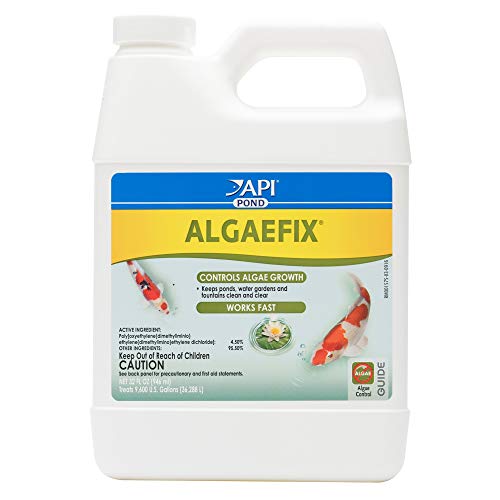
Copper-free algae control that helps knock back an active bloom; aerate while dosing.

CrystalClear Algae D-Solv Pond Algae Control
Fast-acting EPA-registered treatment for green and string algae in koi ponds.
What causes green pond water
Green water is a population explosion of planktonic algae, single-cell organisms suspended throughout the water column. They bloom when three things line up: plenty of light, plenty of dissolved nutrients, and warm water. Remove or limit any one of those and the bloom slows. Kill the algae faster than it can reproduce and the water clears.
The usual sources of those excess nutrients in a koi pond are:
- Too many fish for the volume. Koi are heavy-waste fish. An overstocked pond pumps out ammonia and nitrate that feed algae. Check your stocking with the Koi Stocking Calculator.
- Overfeeding. Uneaten food rots into a nutrient buffet. Feed only what your koi finish in a few minutes.
- Full sun with no shade. A pond in direct sun all day is the perfect algae greenhouse.
- Not enough plants. Plants compete with algae for the same nutrients. A sparse pond hands all that food to algae.
- A young or undersized biological filter. New ponds almost always go green before the nitrogen cycle matures.
How to diagnose it
Green water is easy to identify. Scoop a glass of pond water and hold it to the light. If it looks uniformly green and cloudy, with no visible strands, that is suspended algae. If you instead see hair-like green filaments clinging to rocks and the waterfall, that is string algae, a different problem that a UV clarifier will not solve.
While you have water in hand, test it. High ammonia or nitrite means your filter is not keeping up and your koi may be at risk, which changes your priorities. A simple master test kit tells you whether you have a water-quality emergency hiding under the green.
How to fix green water fast
1. Install a correctly sized UV clarifier
This is the reliable, proven fix. A UV clarifier is a sealed canister with an ultraviolet bulb. As pond water flows past the bulb, the UV light ruptures the cell walls of suspended algae, which then clump together and get trapped in your filter. It does not touch beneficial bacteria on your media or harm your koi.
Two numbers make or break a UV clarifier: wattage and flow rate. A common starting point is about 10 watts per 1,000 gallons, and the water must pass slowly enough to get a lethal dose. Run the numbers in the UV Clarifier Calculator against your real volume from the Pond Volume Calculator. An undersized or too-fast unit is the number one reason a UV "does not work."
2. Cut the nutrients feeding the bloom
The UV kills algae, but you also want to starve it so the bloom does not roar back. Stop overfeeding, remove decaying leaves and sludge, and do a partial water change of 10 to 20 percent. Always dechlorinate the new water first, since chlorine harms koi and your filter bacteria.
3. Add more plants
Plants are your long-term insurance. Submerged oxygenators, floating plants like water lettuce and hyacinth, and marginal plants all pull nitrate straight out of the water and shade the surface. Aim to cover a good share of the surface. This is the single best way to prevent the bloom from returning once the UV has done its job.
4. Use an algae control product if needed
A copper-free algae treatment can knock back a stubborn bloom while your UV and plants catch up. Follow the label dose for your actual gallons, never guess, and run extra aeration while treating. Dying algae consumes oxygen as it breaks down, which can stress koi, so aeration is not optional during any algae treatment.
How to prevent green water from coming back
- Keep the UV bulb fresh. UV bulbs lose output long before they stop glowing. Replace the bulb roughly once a year, usually each spring.
- Do not overstock. Stay within a sensible bioload so your filter and plants can keep up.
- Feed lightly. Less food in means fewer nutrients for algae.
- Add shade. Lilies, floating plants, or a partial pergola cut the sunlight that fuels blooms.
- Maintain your filter and skimmer. Remove debris before it rots into algae food.
- Consider barley straw. As it decomposes it gently suppresses new algae, a good preventive once the water is already clear.
Want the full water-quality picture behind blooms? Read our deeper guide to green pond water and the nitrogen cycle, and if you also fight algae on your rocks, see how to get rid of string algae. Keeping fish indoors instead? Our sister site FishTankCalculator.com covers aquarium algae.
Pond Build & Maintenance Planner
Build planner, stocking planner, water-test log, and seasonal maintenance schedule, in one printable planner that keeps your pond healthy year-round.
Frequently Asked Questions
How fast can a UV clarifier clear green water?
A correctly sized UV clarifier usually clears green water in 3 to 7 days, with visible improvement often in 48 to 72 hours. The water must pass through the UV at the right flow rate, so pair it with a pump that matches the unit. If nothing changes after a week, the bulb may be old, the flow may be too fast, or the wattage may be too low for your gallons.
Will a UV clarifier hurt my koi or beneficial bacteria?
No. A UV clarifier only treats the thin sheet of water flowing past the bulb inside a sealed canister, so it kills suspended single-cell algae and some waterborne pathogens. It does not touch the beneficial bacteria living on your filter media or the algae you want on rocks. Your koi never come into contact with the UV light, so it is safe to run continuously.
Why does my pond turn green every spring?
Spring green water is normal. Beneficial bacteria and plants wake up slowly in cold water, while sunlight and warming temperatures let suspended algae bloom first. This early-season race usually balances out by early summer once plants fill in and the biological filter catches up. A UV clarifier shortens that ugly window, and floating plants help shade the surface.
Do barley straw or pond dye fix green water?
They help but rarely solve a heavy bloom on their own. Barley straw slowly releases compounds that suppress new algae growth as it breaks down, so it works best as prevention, not a fast cure. Pond dye shades the water to limit light, which can slow algae, but it will not clear an active pea-soup bloom the way a properly sized UV clarifier will.
How many watts of UV do I need for green water?
A common guideline for clearing green water is roughly 10 watts of UV per 1,000 gallons, though it varies by brand and flow rate. A 2,000-gallon koi pond in full sun usually wants 20 to 30 watts. Undersized units struggle in summer. Use the UV Clarifier Calculator to match wattage and pump flow to your real pond volume before you buy.
Can I just do water changes to clear green water?
Water changes lower nutrients and can help, but algae multiplies fast, so you often refill faster than you can dilute. Always dechlorinate replacement water before it touches your koi. Water changes work best alongside the real fixes: a UV clarifier to kill the suspended algae, nutrient control to starve it, and more plants to outcompete it for food.
Planning or running a pond?
Use our free calculators and guides to get every number right.
Pond Planner: $39