How to Build a Pondless Waterfall
A step-by-step guide to building a pondless waterfall: sizing the reservoir and basin, matrix blocks or gravel, choosing the pump and spillway, building the stream, and finishing with rock.
A pondless waterfall gives you the sound and movement of running water with none of the standing pool, fish care, or open-water safety worries. Water tumbles down a stream and waterfall into a hidden underground reservoir packed with matrix blocks or gravel, then a submersible pump pushes it back to the top to flow again. It is one of the most beginner-friendly water features you can build, and this guide covers the whole process: reservoir, basin, pump, spillway, stream, and rockwork.
Pondless Waterfall Build Kit & Components
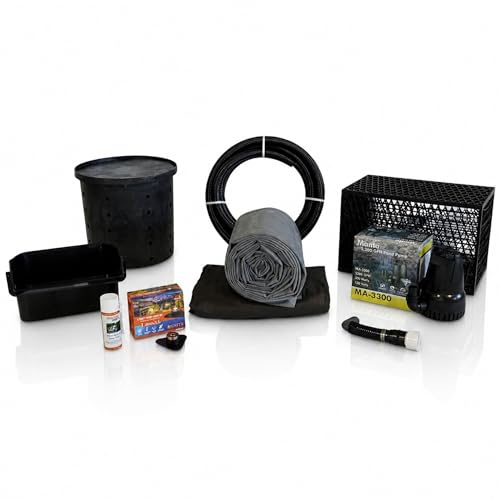
HALF OFF PONDS Simply Waterfalls 3200 Pondless Kit
Complete pond-free kit with MatrixBlox reservoir, EPDM liner, and a 3,300 GPH pump.

Aquascape PRO AquaBlox Large Water Matrix
Modular water-storage blocks that hold far more water per cubic foot than gravel reservoirs.

WaterRebirth 3,200 GPH Waterfall Pump (UL Listed)
High-flow submersible pump built for waterfalls and recirculating features.

HALF OFF PONDS Savio Pond Free 6100 Waterfall Kit
Larger pond-free kit with MatrixBlox and a 10 by 30 ft EPDM liner for bigger streams.
How a pondless waterfall works
The whole system is a closed loop. A submersible pump sits at the bottom of a buried reservoir, which is a hole lined with liner and filled with matrix blocks or gravel that hold water while supporting the rock on top. The pump pushes water up a hidden pipe to a spillway at the head of the falls. Water cascades down the stream, soaks back into the gravel or blocks, and the pump sends it around again. Because there is no open pool, you cannot keep fish, but you also never deal with bioload, ammonia, or overstocking.
Step 1: Plan the run and size the reservoir
Decide where the water starts, how far it travels, and where it disappears. A gentle slope helps; if your yard is flat, you will build up the head of the falls with excavated soil. Sketch the stream length, width, and the height of the falls, because those drive both pump size and reservoir size.
Use the pondless waterfall calculator to estimate how much water your stream and falls hold in transit and how large the reservoir must be to keep the pump submerged. Build the basin to hold meaningfully more than the display volume, with a buffer for evaporation. Matrix blocks store much more water per cubic foot than gravel, so they shrink the hole you have to dig and lighten the load on your back.
Step 2: Excavate the basin
Dig the reservoir at the low end of the run, sized to your calculated volume and deep enough to keep the pump fully under water at the lowest operating level. Dig the stream bed above it, shaping gentle drops and pools that will catch and slow the water for a natural look.
- Make the basin walls firm and slightly sloped so the liner settles cleanly.
- Remove sharp rocks and roots from the whole excavation to protect the liner.
- Create a pump access point, such as a vault or open column among the blocks, so you can reach the pump later without tearing the feature apart.
- Slope the stream bed downhill consistently so water always flows back toward the reservoir.
Step 3: Lay underlayment and liner
Protect the liner with underlayment fabric across the basin and the full length of the stream bed. Then lay a single continuous piece of flexible EPDM liner from the top of the falls down into the reservoir, with no seams in the waterway if you can manage it. Leave extra on every side; you will trim it after the feature runs. Press the liner into the contours of the basin and the stream so it follows your shaping.
Step 4: Install the reservoir matrix and pump
Set your matrix blocks or fill the basin with washed gravel, keeping a clear column or vault for pump access. Place the submersible pump at the bottom where it stays submerged, and run the delivery pipe up to where the spillway will sit. Match the pump to the job: a common guideline is roughly 1,000 to 1,500 gallons per hour per foot of spillway width, measured at your real head height. The waterfall pump calculator turns spillway width and lift into the right flow rating so the falls look full rather than weak.
| Spillway width | Look | Approx pump flow |
|---|---|---|
| 6 inches | Gentle trickle to modest sheet | ~500 to 750 GPH |
| 12 inches | Full, natural sheet of water | ~1,000 to 1,500 GPH |
| 18 inches | Bold, wide cascade | ~1,500 to 2,250 GPH |
| 24 inches | Strong, dramatic falls | ~2,000 to 3,000 GPH |
Step 5: Set the spillway and build the stream
Position the spillway or waterfall weir at the head of the run and connect it to the pump pipe. Seal the back and sides so all the water flows forward over the lip rather than leaking behind the rocks. Then build the stream downhill: arrange flat rocks to create small drops, and let the liner edges rise above the planned water line on both banks so water never escapes the channel. Tuck the liner behind boulders so it stays hidden and protected from sunlight.
Step 6: Add the rock and gravel
Rockwork is what makes a pondless waterfall look like it belongs there. Place larger boulders along the stream banks and the falls, then fill between them with smaller stone and gravel. Cover the reservoir with a grate or a layer of stone so the basin stays hidden but still drains water back through. Work foam sealant behind key rocks at the falls to direct water over them rather than under. Hide every visible inch of liner with stone or soil so the feature reads as natural.
Step 7: Fill, test, and adjust
Fill the reservoir with water and switch on the pump. Watch how the water moves: adjust rocks to fix any spots where it slips behind the falls or pools where you do not want it. Add water until the pump runs reliably submerged at full flow. Once the look is dialed in, trim the excess liner and tuck it out of sight. Because the system has no fish, you do not need to cycle it, though you should keep using dechlorinated water for top-offs to protect any nearby plants.
Maintenance and winter
A pondless waterfall is low effort. Top off the reservoir as it evaporates, clear leaves off the rocks and the pump intake, and rinse the pump screen now and then. In freezing climates you can either run the falls all winter to create striking ice formations, keeping the reservoir topped up, or shut it down, remove and store the pump, and restart in spring. Either way there are no fish to overwinter and no water tests to run.
Pondless versus a full pond
If you love the sound of water but do not want fish care, pondless wins on simplicity, safety, and cost. If you want koi or goldfish, you need a real pond with depth, volume, and filtration instead. Compare the two paths in our koi pond vs water garden guide, and price either option with the pond cost calculator before you dig.
Pond Build & Maintenance Planner
Build planner, stocking planner, water-test log, and seasonal maintenance schedule, in one printable planner that keeps your pond healthy year-round.
Frequently Asked Questions
What is a pondless waterfall?
A pondless waterfall is a recirculating water feature with a stream and waterfall but no open pool of standing water. The water flows down the rocks into a hidden underground reservoir filled with matrix blocks or gravel, where a submersible pump sends it back to the top. There is nowhere for water to collect at the surface, which makes it safer around children, lower maintenance, and impossible to overstock because it holds no fish.
How big should the reservoir be?
Build the reservoir to hold more water than the stream and falls display at any moment, plus a buffer for evaporation and the water clinging to the rocks. A common rule of thumb is to size the hidden basin to roughly two to three times the volume of water in transit. Matrix blocks store far more water per cubic foot than gravel, so they let you build a smaller, lighter excavation while still keeping the pump submerged.
What size pump do I need for a pondless waterfall?
Match the pump to the width of your spillway and the height it must lift the water. A widely used guideline is roughly 1,000 to 1,500 gallons per hour for every foot of spillway width, measured at your actual head height. A wider, taller waterfall needs more flow to look full rather than trickly. Use a waterfall pump calculator to combine spillway width and lift into the right gallons-per-hour rating.
Do pondless waterfalls need a filter or UV?
They need far less than a fish pond. With no fish producing waste, there is no bioload to filter, so most pondless features run on just the pump and the matrix or gravel reservoir, which traps debris. The rocks and moving water stay reasonably clear on their own. You may still add a small UV clarifier if direct sun turns the water green, and many builders include a simple intake screen or skimmer to keep leaves out of the pump.
Can I add fish to a pondless waterfall later?
Not really, and that is by design. A pondless waterfall has no open pool deep enough or large enough to safely hold koi or goldfish, and the water lives mostly inside a gravel-filled reservoir. If you decide you want fish, you are looking at building a pond instead, with the depth, volume, and filtration that fish require. Keep the two projects separate: choose pondless for the sound and look, or build a pond for fish.
How much maintenance does a pondless waterfall need?
Maintenance is light compared with a koi pond. Top off the reservoir as water evaporates, especially in summer, keep leaves and debris off the rocks and out of the pump intake, and clean the pump screen periodically. Once or twice a year you may rinse the reservoir and check the pump. With no fish and no biological filter to manage, there is no feeding, no water testing for ammonia, and no winter fish care to worry about.
Planning or running a pond?
Use our free calculators and guides to get every number right.
Pond Planner: $39